
As Jony Ive and Sam Altman hugged and sipped espressos at a picturesque North Beach cafe in May 2025, a new war was brewing. The coffee date was featured in a viral video to announce that Altman’s OpenAI was acquiring io Products, a small hardware startup founded by Ive, the legendary designer of the Apple iPhone and perhaps the world’s most famous tech product designer.
Their alliance signaled a brazen ambition to build the next great consumer product—this time for the AI age, and a bet that OpenAI, the maker of ChatGPT, could unseat the likes of Apple using the iPhone maker’s former design star.
Now, before any products have even been released, a scorched-earth lawsuit from Apple that accuses OpenAI of trade secret theft has thrown those plans into chaos, raising the stakes for the AI startup—and Ive—to deliver a flawless, high-profile hit device.
OpenAI’s device, expected to ship as early as next year, is still something of a mystery. A recent Bloomberg report citing anonymous sources described it as a home-speaker-like device that will serve as an active AI companion and feature moving mechanical parts designed to mimic human behavior.
A source familiar with OpenAI’s plans told Fortune that the design of the initial hardware device has been finalized, while work on a broader family of AI devices proceeds.
Success is hardly guaranteed. Building hardware as a company with zero track record is hard enough, and inventing an entirely new class of device for AI is a goal that has already humbled some startups and burned hundreds of millions of dollars in investors’ cash.
For OpenAI, the move into hardware is being driven by more than just a desire to sell a hot gadget. With the 11-year-old organization no longer the undisputed leader in large language models, hardware represents a strategic, maybe even critical, evolution of its business—a way to put its AI models in the hands of consumers and lock them in, giving them a reason to use OpenAI’s models even if they aren’t clearly better than rivals’ and ensuring that competitors can’t cut off the path to those users.
“They’re being forced to build hardware because it gives them more control over the user experience,” said Anshel Sag, a principal analyst at Moor Insights & Strategy who specializes in spatial computing. “The biggest challenge that OpenAI has is delivering on something that is compelling enough to get people to actually buy it.”
Ive, of course, built his legacy at Apple on an obsessive discipline: perfectly made products, developed in tandem with Apple founder Steve Jobs. The question now is whether Ive can pull off another feat of product design magic for a different fast-moving tech company. That would be challenging under the best of circumstances. Apple’s lawsuit threatens to derail the project.
Two hubs, one vision
In the roughly one year since OpenAI acquired Ive’s io Products for $6.5 billion, the io team has been integrated into the parent company as the OpenAI hardware group. While OpenAI’s leadership and the majority of its staff work out of the company’s headquarters in San Francisco’s Mission Bay district, the hardware team, which is now more than 400 employees, works out of the original io building in Jackson Square, a charming neighborhood of brick buildings and upscale furniture and design shops on the other side of town.
While Ive is not technically an OpenAI employee, he is spearheading the project, collaborating with the hardware team—who are now full-time employees of OpenAI—while also continuing to lead his standalone design firm, LoveFrom, which is providing the design services and setting the aesthetic for OpenAI’s family of devices.
The structure means that OpenAI’s hardware products are effectively being shaped by multiple teams and organizations, bringing together some of the world’s top talent across fields like mechanical engineering and industrial design, but also creating risks of clashing visions and cultures, as well as challenges in overall efficiency.
People who have worked with Ive told Fortune that he is charming and deeply diligent about his designs and cares greatly about his reputation and which projects carry his name. “He’s that kind of designer. He will be laser-focused, so he basically hasn’t got time for anything else,” said Clive Grinyer, who has been friends with Ive for decades since they worked together at the design firm Tangerine in London, before Ive went to Apple. When Grinyer spoke to Ive a few weeks ago, Ive said he was “very, very busy.”
At Apple, Ive had very high expectations and pushed the design studio team further than many thought was necessary at the time, recalls one former colleague who worked with Ive at both Apple and LoveFrom. But the end product was always better, they said, and Ive was very well liked, especially for shielding the group from broader internal pressures around things like cost and timelines. According to some former Apple executives, Ive’s commitment to loyalty mirrored Apple’s fierce corporate culture, in which defections to rivals were treated as treasonous.
By some accounts, Ive and Altman have a genuine friendship. Altman has spoken about meeting Ive’s family, and Ive said his son, Charlie, was the first in his family to use ChatGPT and encouraged Ive to meet Altman. To keep each other abreast of the hardware progress and other business matters, Ive, 59, will trek to OpenAI HQ, and Altman, 41, will just as often visit Ive in his locale.
Whether their partnership creates the same magic as Ive’s nearly 15-year-long collaboration with Jobs remains to be seen. With OpenAI preparing for an initial public offering and locked in a fierce competition with other frontier model makers, Altman and the company’s leadership have a lot of priorities competing for their attention.

The race for the next device
OpenAI is one of several major tech companies, including Apple, Meta, and Google, racing to create the next essential tech device by fusing AI and hardware together into a new class of gadget. Such devices have yet to prove themselves with consumers, and the path is already littered with casualties: highly hyped, AI-first gadgets like the Rabbit r1 and the Humane AI Pin flopped spectacularly on arrival. The Humane device, a voice-enabled AI assistant that clipped onto a user’s shirt, was created by two former Apple employees and raised $241 million in venture funding.
Because of limitations in mobile operating systems and cellular connectivity, tech firms are trying to crack how best to package consumer AI—be it wearables, robots, or phones—and how to get AI to run mostly locally rather than relying on outside connectivity.
Another key challenge is privacy. Devices that record users in the home, as OpenAI’s device is rumored to potentially do, are among the most risky when it comes to consumer privacy. “People wonder if an AI device is recording them or not, and it’s really uncomfortable to have to ask that question,” said Elena Wagenmans, co-founder and CEO of TAYA, which makes an AI-powered necklace that does not have an “always-on” mode and features other built-in privacy safeguards.
OpenAI’s Altman has described early prototypes of the device as “simple” and less distracting than a smartphone. “You trust it over time, and it does have just this incredible contextual awareness of your whole life,” Altman said in an on-stage interview alongside Ive in November 2025.
Given Altman’s controversial reputation—he was briefly fired in 2023 for not being “consistently candid” with the company’s board of directors, and a lengthy New Yorker article this year raised a litany of questions about his trustworthiness—consumers may have misgivings about putting an OpenAI AI device inside their home, no matter how slick a product Ive designs.
“A beautiful object does not solve a trust deficit,” said Gary Sheng, founder of the applied-AI agency Hyperagent Labs. The performance, and usability, of OpenAI’s voice technology, including the newly released GPT-Live, will also be important—with consumers sensitive to the right balance of usefulness and intrusiveness.
Ive is said to be motivated, at least to some degree, by a desire to make amends for the negative societal side effects wrought by the smartphone, such as screen addiction and toxic social media. “I think he feels some responsibility for what happened with the iPhone,” said Grinyer, the longtime Ive friend. “It became a gateway to this terrible world.”
Aside from the speaker device OpenAI is reported to be building, the company could also be eyeing a smartphone with AI agents replacing apps, industry analyst Ming-Chi Kuo reported earlier this year. Other products rumored to be in the potential suite of devices include AI glasses and an AI pin.
Why hardware is notoriously difficult
To build and ship a family of new devices, the Ive-OpenAI alliance will need to be hyper-focused, including assembling a manufacturing system from scratch. It’s a tough task, and one that will be made all the more difficult as OpenAI fights Apple in court over the team it has assembled.
Apple’s lawsuit alleges two former employees now working at OpenAI unlawfully took confidential data, including information about vendors and contractors in Apple’s supply chain, as well as details about unreleased hardware products and technical specifications. The complaint, which claims that more than 400 former Apple employees now work at OpenAI, names Tang Tan, OpenAI’s chief hardware officer and a former vice president at Apple, Chang Liu—another former Apple employee now at OpenAI—and io and OpenAI. Ive is not named.
OpenAI said in a statement that it is not aware of any evidence that Apple’s allegations have merit and that it has no interest in other companies’ trade secrets. “We believe in fair competition and allowing people the freedom to work wherever they choose,” the company said.
Saurabh Vishnubhakat, an intellectual property law professor at Cardozo School of Law, told Fortune that the lawsuit is more likely to “slow, compartmentalize, and reshape OpenAI’s hardware project” rather than kill it outright. “The risk is that OpenAI ends up having to quarantine files or employees, redo engineering work, abandon a manufacturing process, or replace a supplier,” he said.
Care, craft, and complexity
Delays can be costly, particularly with so much at stake. Still, despite the breakneck pace at which large language models and agentic AI are evolving, AI devices are still in the embryonic stage and very much undefined—a fact that may play to Ive’s strengths.
At LoveFrom, Ive has sought to build a culture centered on care. The firm’s name comes from a conversation with Apple’s Jobs about the importance of making products thoughtfully. Its 50 to 60 employees in San Francisco often write each other thank-you notes and design small gifts for one another (a tradition carried over from Apple’s design studio). The team includes designers, color specialists, and sculptors who physically build products from scratch.
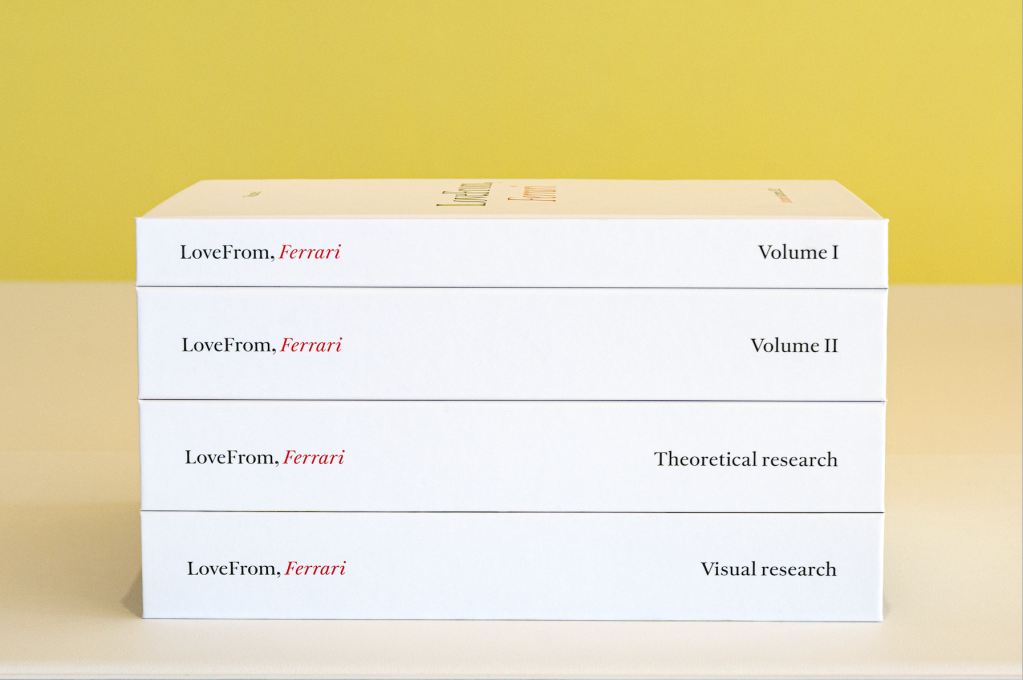
The design firm’s most notable project outside OpenAI has been designing Ferrari’s Luce, the Italian automaker’s first fully electric car, which drew mixed reviews when it was unveiled in May. LoveFrom began the Ferrari project with months of research, producing four thick books on topics such as “speed,” before designing the vehicle.
Ive, who has described the design process as “unpredictable,” has a history of playing with different styles. Although he championed a clean, minimalist aesthetic during his time at Apple, he embraced more ornate, decorative graphics that mimic physical objects after LoveFrom took on Airbnb as a client in 2020.
“It’s very easy to be different, but very difficult to be better,” Ive is quoted as saying in the book Jony Ive: The Genius Behind Apple’s Greatest Products by journalist Leander Kahney.
To become a hardware powerhouse, OpenAI needs Ive to do both.
This story was originally featured on Fortune.com
Recent Comments